Showing posts with label Butuanon Facts. Show all posts

Saturday, August 13, 2011

Another Untold Story of Butuan

Once upon a time before the Philippines was discovered by Ferdinand Magellan. A beautiful place where mountain hills, river, sea shores and water can be seen in that time. The seashore is at the foot of the mountain and hills.

The early civilization started life in upland and high level above the sea and along river banks. Time passed and due to erosion of the mountain, soils cover the seashores, the plain land grows bigger and wider. The seashores were now far from the mountains as it was used to be.


Agusan River (got its name from the word "AGUS" which means "flow of water") is one of the longest river in the Philippines during that time. The river gently flows in the foot of the mountains. People are using the river as their means of transport and communication. They uses the river for delivering and trade their crops to the mainland. Most people who travel along the river, they always pass a narrow part of the river which they find very difficult to navigate because of a big formation of rock that is blocking the river. Thus, this place was locally know as "PIT-OS" which means "Narrow or Difficult". "Pit-os was then called "Bit-Os".

The civilization in the main land was growing and the place was known to be the Trading Capital of Asia. Many merchants from China and other places brought their products for barter and trading with the natives which also trades goods like gold and their crops.

Sadly, Agusan River happened to be in a volcanic fault line. By the time there was a massive earthquake, the rock formation which was known as "Pit-Os" was shaked and fell down to the river and blocks the narrow creek which most people used as their passage to the main land. Due to the earthquake,  the Agusan River system was rerouted and the old narrow creek was gone. This happened when people heard a loud explosion due to the erosion of the rock formation along the narrow creek known as "Pit-Os".

Because of what happened to "Pit-Os", most of the traders were stranded and cannot find ways back to the sea. Thus, that loud explosion heard was the origin of which Butuan got its name.

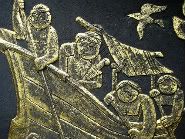
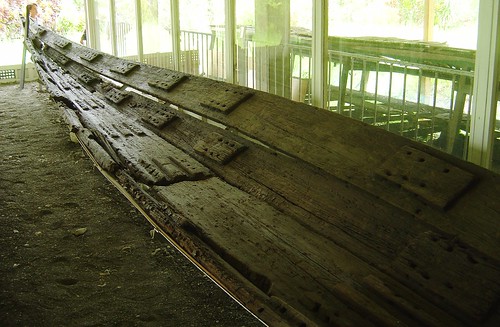
During the early part of 1970, many artifacts were found from digged ancient boats at Libertad, the place were most of the traders were stranded during the time when the narrow creek called "Pit-Os" was block due to the explosion cause by a massive earthquake. These boats were called Balangay which happens to be a trademark for Butuan's rich culture and history. 

* The rock formation that block the river during the earthquake was called Bit-Os Moon Rock, this name was given by the person who discovered it, Ramon P. Carampatana. Archaeologists said that the rock was 2 million years in existence.


Saturday, June 4, 2011

Interesting Spots in Butuan

I recently stumbled to a very interesting page which tackles all about Butuan, its rich culture and history as well as  interesting  places to visit. I collected some posts from a couple of blogs about these informations. This may not be the recent list but im certain that these are some of the places to go when you are in Butuan.


Just off to the north of the Caraga region lies Butuan City, an ancient metropolis that has been the staging ground for some of the most significant events in Philippine history, including the first public display of the national flag and the first celebration of Easter. Toady it is also known as a prime tourist destination.


  • Bonbon Ecopark

Bonbon Eco Park and Leisure Farm is a park where people can visit and enjoy. This park is a mountain resort in Butuan. This park is located at barangay Bonbon, Butuan City. Entering barangay Bonbon to visit the park, you’ll see many trees. Upon reaching the inner most, you’ll have to ride firsts to a Lawin jeepney, having your car left in the parking area. The Lawin jeepney will bring you inside the park. You’ll see a pond with fishes. There are cottages for you to stay in. There are two swimming pools, the first one is for adult, and the other one is for the kids. There is mini water falls that can massage your back. This water is come from the mountains which is good, refreshing and from nature. You can relax in this place because it is very peaceful and quiet.


  • Balanghai Shrine

The Balanghai Shrine is located 5 km away from the city. It is a one-storey building being maintained by the National Museum. There lies the first native boat in Southeast Asia that is commonly called as "Balanghai", or small Badjao boat that was excavated in the early 1970’s. Up to now, nine Balanghai’s have been discovered. A proof that the Philippines have a rich and cultural past and a tradition that is worth preserving.

  • Bood Promontory Eco-Park

Hidden in the forest of Pinamangculan, Butuan City, there you will see a replica of the image of Magellan’s cross, the Bood Promontory Eco Park. This tourist attraction is considered as one of Butuan’s Pride. In this place, we can see the structure of Magellan’s cross, the evidence of the first mass here in the Philippines. Ever year, many tourists visit this site because of its natural location. As of now, the government of Butuan City is starting to develop this site as one of Butuan’s tourist attraction. Today, the indigenous “Hadlayati Tree” still abounds lording over a colonial nursery and Tree Park, and the serpentine Masao River (El Rio de Butuan) amidst fishponds and archaeological treasures.
The Bood promontory Eco-Park was constructed not just for its historical significance but to provide to the people of Butuan including its visitors to rekindle the past during the first landfall of Magellan in the Philippines.

  • Butuan Rizal Park
  • The St. Joseph Cathedral

Just in front of the St. Joseph Cathedral lies the Rizal Park. It was called Rizal Park because it was a tribute to Jose Rizal. It is famous for its colorful lights during night. Thus, it attracts many people and most of them make this place a dating spot, and the Philippine flag that waves therein is the official flag of Mindanao.
The St. Joseph shrine is a beautiful church you can pray in. It has adoration rooms and confession corners in it. Inside the church you can see the beautiful glasses and precious gold paints that keep the harmony inside it. You can attend masses weekdays and weekends. The church also was renovated for years. It was built back 1900s. But still, it keeps its beautiful design. 

  • Butuan National Museum

The fascinating Regional Museum of Butuan contains the amazing artifacts of Butuan History that dating back centuries from the past. The museum is divided into two. The archeological room and the ethnology room. In archeological room, you can see the jars, jewelries and other ceramics. You can also see some replicas of ancient people. Outside the Regional Museum is the wonderful and breathtaking scenery of a pond and a bridge along it. You can rest under trees around it. It’s a good place to be here in Butuan.

  • Butuan City Hall

Another landmark that Butuanons are definitely proud of is its City Hall. It is the realization of the Butuanons' dream of having a comfortable and convenient place where the officials and their constituents meet and work hand in hand in order to attain the betterment of the city and its people. It has a very spacious lawn and its landscape is truly majestic. The building itself is a clear representation of the perseverance and hard work Butuanons have to exert for the achievements of their goal. The Butuan City Hall Complex was inaugurated in August 2, 2005. It was the same day when Butuanons celebrate its 55th Charter Day with pride and honor.

  • Dottie's Place

If you’re planning to go to Butuan City, Dottie’s Place is a must-go. It is located at the heart of the city and is just a block away from the mall. It has great service and offers only but the best. It has a pool, restaurant and hotel all in one. It can also host different events even with a huge crowd because of the size of its convention hall. You’ll certainly enjoy life’s pleasurable pauses while staying at Dottie’s Place.

  • Sto. Nino Shrine

One of the most-visited churches here in Butuan is the St. Nino Shrine. The patron saint in this church is the child Jesus, also called as Santo Nino. According to the local residents, Magellan first brought Santo Nino in Butuan City, which made the early Butuanons to create a church and named it as St. Nino Shrine. It is where many devotees and tourists visit, for it plays home to other valuable religious relics and artifacts.

In present, there are only three priests who celebrate the mass in this church. Those priests are Bishop Zacarias Jimenez which is the parish priest of St. Nino Shrine and the two other assistant parish priests; Fr. Rex Cassion and Fr. Danny Arillano. There year in it are altar boys who served in the mass. The feast of Santo Nino is celebrated every 3rd Sunday of January. Many devotees celebrate this feast and enjoy the blissful day.

  • Diosdado Maacapagal Bridge

Standing just a kilometer or so from the Old Magsaysay Bridge is the newest and dare we say, most marvelous man-made structure in all of Mindanao. Indeed, the “new” Magsaysay Bridge of Butuan City is a testament in concrete and steel of the City’s drive to be of the economic activity. This leads to the tomorrow’s future of Butuan City.
The bridge also provides a romantic setting that will no doubt be the subject of artworks, photographers and for new at least, leisurely strolls by Butuanons. Spanning a scenic section of the Agusan River, the Bridge is still located in one of the outlying Barangays of the city. Well, if the bridge will be viewed from afar, it would gleam in almost silver-like splendor when touched by the sun.

Certainly, these words are enough in deserving the wonderful features of the “new’ Magsaysay Bridge. For now, it stands forever to the better future of Butuan City.

  • Mount Mayapay

Rising to nearly 700 meters ( 2,200 ft) Mount Mayapay is one of the most impressive monuments in stone that nature has carved in the entire Caraga region. Mount Maypay is very near Agusan Valley, and it one of the favorite destinations of climbers and adventurers. However, the mountain and the area around it is also rich in history, evidenced by the fact that the name Mayapay was derived from the Madjapahit Empire.


  • The Butuan Boats (Balangay)

No visit to the city would be complete without a look at the Balangays, the most ancient sea vessels ever found in the Philippines.

The wood boats, of which nine have been unearthed, date back to the fourth century AD, centuries before the Spaniards came. Another intriguing aspect of the Balangay is that their shape and design are unique; there is nothing like them elsewhere in the Philippines, or anywhere else for that matter.


  • The Golden Tara

Butuan City has had a such a long and varied history that numerous artifacts have been discovered in its vicinity more often than any other place. One of the most amazing is the figure known as the Golden Tara.

It was in 1917 when a native resident unearthed the figurine from the banks of the Agusan River, itself a source of lore and legend. Weighing in an four pounds, it shows a woman sitting cross legged, with the whole thing made of 21k gold. Its origin is still unknown, but it is supposed by archeologists to represent a goddess.


  • The Agusan River
Much of the history and culture of Butuan City can be found and relived with a boat tour of the Agusan River, the largest in the whole of the Visayas.


If you take a boat tour of the whole river, you are not just passing by its waters, but because there are several communities that were built along the river bank, you will also get a chance to examine the life and cultures of the peoples then. Such as the importance of the place that a festival is held in its honor every year called the Abayan Festival.

  • The Diocesan Ecclesiastical Museum
The Diocesan Ecclesiastical Museum is recognized as the very first repository of Catholic relics in Mindanao, and is frequented by devotees.

As such, the museum houses some of the most important items in the Catholic Church’s history in Mindanao and Butuan City. Among those that you will be able to see are antique goblets, cups and attires worn by the various clergy that held office there.

  • The Sto. Niño Diocesan Shrine

Before the Santo Nino was taken to Cebu, Magellan had taken the statue to Butuan City, where it made a strong impression on the local populace. This would eventually lead to the creation of the Sto. Nino Shrine.

Located in Libertad, the shrine is noted for the number of images and relics that are housed there, which have been drawing in large numbers of people. Aside from the shrine itself, Mount Mayapay is nearby as well, providing an attractive contrast to the altar.

Thursday, January 27, 2011

Butuan and Balanghai - A Journey Through Time

I'm about to sleep and I stumble to this blog post. I really find this one very interesting.

We usually  hear this word  around  this  time  of summer as  we usually equate it with the  city’s  display of culture and tradition as well as its opportunity to show  the  development  highlights it has travailed in its a thousand  years  of existence, from an influential maritime  kingdom in the  Sri Vidjayan and  Madjapahit Empires, to a gold  finders paradise in the early 20th century… to a  booming timber-town in the 50’s.  From a  fragile, perennial  calamity hit locality… to  a rising highly urbanized  regional  capital of today…to that  of vigorous  shining metropolis  in the near future. Let us again take a review of Balanghai, and how this great Indo-Malay  word came  to represent this  city’s journey through the past millenia.


Golden VoyageSince the 10th  century,  Butuan  appeared to have been in good relations with  the Srivijayan Empire. Being  located on the coast of Mindanao,  balanghais are  often docking at the Butuan bay keeping good business  between the local  people of Butuan and traders from the neighboring empire.

During the 1970’s,  these  balanghais  were exposed through an  excavation to the modern  time and found that through carbon-dating process, the boats were almost a thousand years old.
Building  balanghai requires  teamwork and  unity among workers which is why it was  used by the Philippine  Government as a term to  refer to the smallest political unit, now became popularly pronounced as barangay.

Butuan’s Early Balanghais
A  balanghai, or some refer  to it as balangay,  is a wooden boat adjoined by planks, and  believed that  the term originated from an  Italian archaeologist named Antonio Pigafetta  in the 16th century  when he mentioned  the word spelled “balanghai”.

The  balangays did not serve just a  wooden boat  but stood as a symbol for social unit. In the 16th century,   Spaniards found  out that balangay also referred to the smallest unit of politics among Filipinos.
Balanghai Boats


Late 1970’s,  balangay boats were  discovered in Butuan City by the National Museum archaelogists.  Nine were  recovered during the excavation. The first is being presently preserved and displayed  in the museum in  Libertad, Butuan City. It had  undergone carbon-dating  and  dated at year 320.  The second  boat, dated 1250, is presently located at the Maritime Hall of National Museum in Manila. The third  was  transferred to Butuan  Regional Museum while the six other boats are under the process of  excavtion and  preserved,  remaining to their original waterlogged condition to protect the artifacts.

The Historical Butuan
The city of Butuan is the home  of treasures such as the  Tara, golden  figurine of Buddha’s consort, an array of lustrous,  most intricate jewelry, a collection of priceless ceramics  from the Sung Dynasty, and  the remains of the early balanghai.

These precious  treasures of Butuan  are now found around the globe.  The Tara is now at the Field Museum in Chicago, the Chinese  precious findings and the restored  balanghais are being displayed  at the National Museum,  and the incomparable gold jewelry is the Metropolitan  Museum of Manila’s grandest collection.

The first mass in the  Philippines is believed to have  taken place near  the Agusan River,  and it is said that Ferdinand  Magellan himself dropped the anchor of the ship in 1521 at the Agusan River, and held a  mass to  commemorate the event.


BALANGHAI FESTIVAL
The Festival


Commemorating  the coming of the early settlers from Borneo and Celebes, Butuan in Agusan  del Sur is celebrating Balanghai  Festival during  the third week of May, coinciding the feast of Butuan’s patron  saint, Saint Joseph.

The balanghai,  also known as balangay and Butuan boat, is  the first water vessel to have  excavated in Southeast Asia, serving as  evidence to the craftsmanship of the early Filipinos in attempting to transport on water.

Balanghai Festival is  one historical event commemorated  through a  night of exotic performances, costumes in an array of colors and creativity, and dazzling floats. One can also take part in the festivals activities such as contests, exhibits, and many other events.
 

Saturday, September 18, 2010

Butuanon Facts


Mangyat Kaw Mag-Binutuanon?

Butuanon belongs to the Malayo-Polynesian branch of the Austronesian languages, one of the world’s largest language families, both in terms of numbers of languages (more than 1,200) and in geographical spread (from Madagascar in Africa to Easter Island near the coast of South America.
In relat…ion to other Philippine languages, Butuanon belongs to the Southern branch of Visayan languages, and the Visayan languages in turn belongs to the Southern branch of Philippines languages (to which the Mindanao, Bicolano, and Tagalog languages also belong). As such, most of the words in its vocabulary are cognate to the words found in other Visayan languages. Its grammatical rules are also similar to its fellow Visayan languages Surigaonon and Cebuano.
There is a common misconception that Butuanon is a dialect, but in fact it is a language.
Dialects are defined by international linguistic standards as mutually intelligible versions of a language. For example, the common medium of communication in Baranggay Babag Butuan City is mutually intelligible with the one used in Talakugon Municipality; thus both are dialects of the same language, which is called Butuanon by international linguists. Butuanon as a language is at par with the other 160 or so Philippine languages, including Tagalog, and the rest of the world’s languages. To call Butuanon a dialect does not do justice to this rich and complex language.
Language is the main medium by which humans communicate ideas and feelings to each other. Consequently, language is not only the main transmitter of human culture, but it also forms the most important part of culture. Without language, human society and culture would not exist at all.
Language also has another role that is often overlooked. Each language is shared by a cultural community, and forms the main basis for the existence of such a community, which is called an ethnolinguistic people. If the language of an ethnolinguistic people dies, so does this people. For example, if no can speak the Butuanon language, there will be no Butuanon ethnolinguistic people.
Children are born with the ability to learn any language, but they usually (sic), this is their parents’ first language—a language that has been passed down from generation to generation for hundreds of years.
There are at present more than 6,000 distinct languages and peoples of the world. Each week, one or two of them die out, usually due to years of discriminatory policies of governments that promote only the language of their capitals and centers. These languages differ in pronunciation, vocabulary, and grammar. Each language offers unique concepts and ways of expressing them, and thus unique perspectives (points of view), besides defining the very peoples of the world. Each of them is priceless and irreplaceable, a treasure that humanity can hardly afford to lose.
Any language with less than 300,000 speakers is regarded by international linguists as endangered. The Butuanon language at present can only be spoken by less than 1,000 youngsters in Butuan itself. If the next generations of Butuanons are not taught Butuanon in school, that will be the end of the Butuanon ethnolinguistic people.
Butuanon Syllabus
Butuan Global Forum
The main purpose of this syllabus is to preserve the priceless and irreplaceable Butuanon language that has defined the Butuanon people for more than a thousand years.
Butuanon Pronunciation
Two important points on the pronunciation of Butuanon words:
1. The student should take note that Butuanon has prolonged vowels such as ââ, ûû, ôô, îî, which are pronounced as prolonged sounds of the shorter vowels. (This is a characteristic it shares with Cebu City and northern dialects of Cebuano, and perhaps other Philippine languages, but not with other Visayan languages such as Hiligaynon and Karay-a, and also not with Tagalog.)
These are true phonemes, not diphthongs (two vowels pronounced in sequence.) This has to be clarified because most Philippine language syllabuses aim to teach Tagalog, which does not have these prolonged vowels. Thus Tagalogs pronounce ‘aa’ as ’a-a’.
Example 1: Tagalogs prononounce ‘tsaa’ as ’tsa-a’, while Butuanons and Northern Cebuanos pronounce it as ’tsââ’.
Example 2: Tagalogs pronounce ‘oo’ (yes) as ‘o-o’, while Butuanons pronounce it as ôô. In this syllabus, we will follow the Butuanon pronunciation.
2. Another important point is that the ‘L’ or ‘l’ phoneme in other Visayan languages is usually not pronounced in Butuanon cognate words if it occurs in the middle or at the end of a word..
Example 1: The Butuanon cognate word for the Cebuano ‘balay’ is ‘bâây’ (house).
Example 2: The Butuanon cognate word for the Cebuano ‘tambal’ is ‘tambââ’ (medicine).
Example 3: The Butuanon cognate word for the Cebuano ‘katumbal’ is ‘katumbââ’ (pepper).
Butuanon Syllabus – Lesson One
Butuan Global Forum
LESSON ONE
NON-VERBAL SENTENCES
DESCRIPTIVE, CLASSIFICATION and EQUATIONAL SENTENCES

A Butuanon sentence is made up of COMMENT and TOPIC. The TOPIC specifies what the speaker is going to talk about.
TOPIC MARKERS indicate the TOPIC. For a PERSONAL NAME (PN) the topic markers are SI/SINDA. For a NON-PERSONAL NAME (NPN) the topic markers are ANG/ANG MGA.
PERSONAL NAME (PN) refers to the names of persons or titles that are substituted for the names of persons. SI is the singular topic marker and SINDA is the plural form.
Names: Jo – Maestro si Jo. Jo is a teacher.
Bobit – Niwang sinda Bobit. Bobit and his companions are thin.
Titles: Doktor – Buotan si Doktor. Doctor is kind.
Attorney – Maaslag sinda Attorney. Attorney and his companions are big.
NON-PERSONAL NAME (NPN) refers to words that are not names of persons or titles substituted for names of persons, and to groups of words, phrases and sentences, which function as a noun. ANG is the singular topic marker and ANG MGA is the plural form.
Words:
Ginoo – Maluluy-on ang Gino-o. God is merciful.
Pangoo – Si Lino ang Pangoo. Lino is the President.
Bata – Tambok ang mga bata. The children are fat.
Phrases:
Kang Cory – Patsada ang kang Cory. Cory’s is pretty.
Kaaba ni Cris – Patsada ang kaaba ni Cris. Cris’ dress is pretty.
Yaton lamisa – Madiyaw ang yaton lamisa. The one on the table is good.
Either SI or SINDA always marks the TOPIC, unless it is a pronoun (personal or demonstrative) in which case the TOPIC FORMS of these pronouns are used.
The topics are indicated in the following sentences.
Maaslag siya. (Personal Pronoun) He/She is big.
Imo iyan. (Demonstrative Pronoun) That is yours.
NOTE: the topic pronouns are also referred to as focus pronouns. Pronouns and FOCUS will be explained later. Also the English equivalent of the third person singular pronoun SIYA is both he and she. He will be used as the English equivalent throughout the books.
The COMMENT says something about the topic. The COMMENT usually begins the sentence. A sentence whose comment is not a verb is a NON-VERBAL SENTENCE. While there are many types of non-verbal sentences, this lesson emphasizes three types of non-verbal sentences:
DESCRIPTIVE SENTENCES – when the comment is an adjective describing the topic.
Tambok ang bata. The child is fat.
Niwang sinda Maria. Maria and her companions are thin.
Mahaaba ang tao. The man is tall.
Dakwa ang lamisa. Table is big.
CLASSIFICATION SENTENCES – when a noun is the comment of the topic describes the topic or identifies as to type or class.
Maestro si Rolly. Rolly is a teacher.
Mga estudyante sila. They are students.
Doktor ang tao. The man is a doctor.
Magbasakay sinda Boyet. Boyet and his companions are rice farmers.
EQUATIONAL SENTENCES – when there are two topics, which are equal to each other, serve as comments for each other.
Si Rolly ang maestro. The teacher is Rolly.
Si Tiron ang amigo ko. Tiron is my friend.
Sila ang mga estudyante. They are the students.
NOTE: In equational sentences there must be agreement in the use of plural or singular form of the two topics. In descriptive and classification sentences if the topic is plural, the comment may be made plural by putting mga before the comment but it does not have to be plural.
Niwang sinda Ryan. = Mga niwang sinda Ryan.
Estudyante sila. = Mga estudyante sila.
NEGATION. The negation of these non-verbal sentences is made by putting DII before the comment.
Tambok ang bata. Dii tambok ang bata.
Maestro si Rolly. Dii maestro si Rolly.
Si Tiron ang amigo ko. Dii si Tiron ang amigo ko.